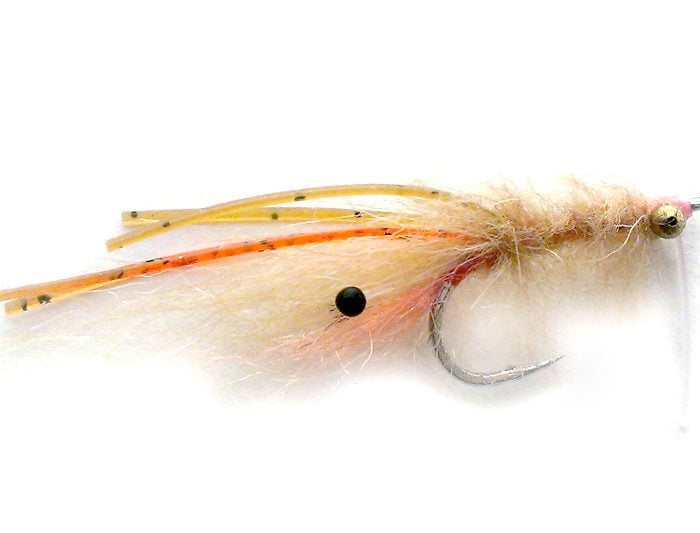
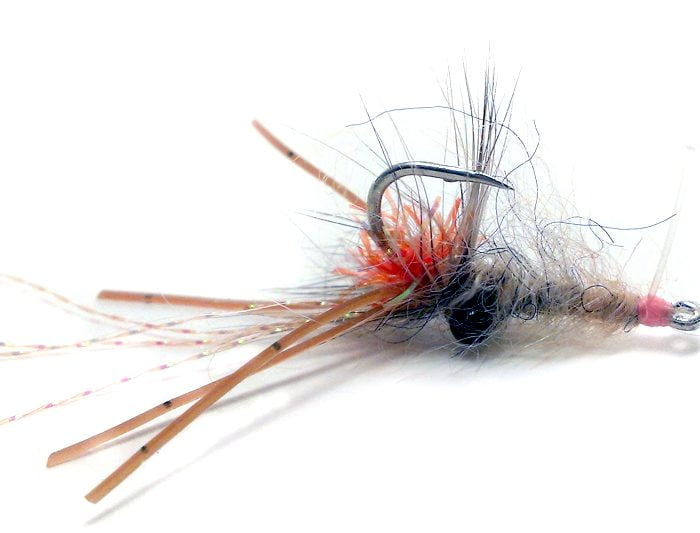
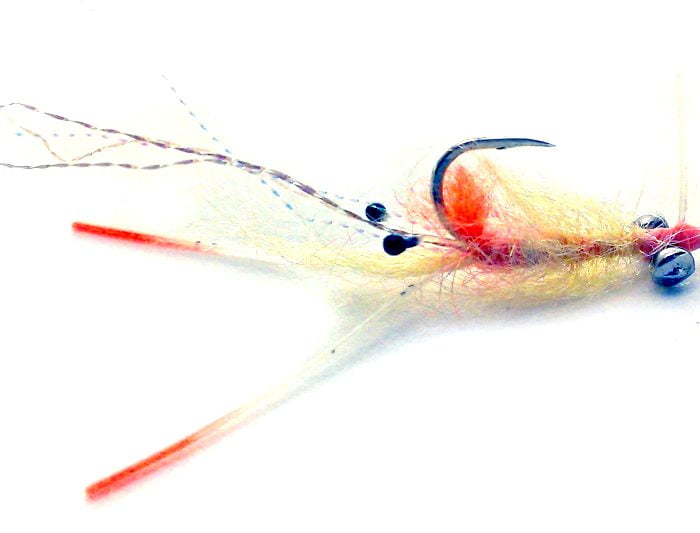
BEST BONEFISHING WEEDGUARD EVER*
When I first began fly fishing for bonefish some years ago, I was constantly frustrated by the way most bonefish fly patterns hung in the thick turtle-grass flats I fished. I realized early on that some sort of dependable weedguard was essential for any kind of mental well being, not to mention success on the flats.
After years of field testing and experimentation, this is still the most dependable weedguard I've used.
*Author's opinion only. He assumes no fault, liability, nor is subject to legal action. Use at own discretion. Fish responsibly.
Step-By-Step Instructions
Step #1: Flatten the tip of a piece of stiff 20-25 pound mono with a pliers. (Mason hard mono is good brand.) Secure to the head of fly with a few thread wraps.
Step #2: Clip monofilamant so it extends a little past the hook point. Then use your thumbnail to push the mono prong upright as shown.
Step #3: While holding the monofilament prong upright, make wraps of thread behind the prong as shown above. Keep wrapping until you build up a mound of thread and the prong holds itself up.
Step #4: Once the prong is upright and aligned with the hook point, whip finish the fly head as usual and toss it with confidence next time your fishing those frustrating grassy flats. Tight lines!
Works best on flies that ride hook-point up, but does work on inverted flies if they aren't too heavily weighted. This "single-prong" style weedguard is widely used in the Florida Keys where grassy flats are the norm. It excells over other style guards for several reasons. First, it is very easy to tie or add onto an existing fly. Second, it doesn't get in the way of hooking the fish (like some loop-style guards).
Speaking of loops, I experimented with those for quite a while and found an interesting thing. Standard loop-style weedguards (such as used on many snook flies) excell when you're tossing flies back into mangroves or brush. If you miss you can usually retrieve the fly very slowly and it will slide back out of the branches. However, when used on grassy flats these guards seem to "lasso" blades of grass as the fly falls after the cast or as it hops on the retrieve. Single-prong guards don't do that. << Back to FLYTYING Page